
Yes. Laser treatment for facial hair removal is safe, and it works. The technology targets melanin inside the hair follicle using concentrated light energy, not the surrounding skin, which is what makes it clinically appropriate even for sensitive facial areas. Decades of studies confirm its safety profile. Serious long-term complications are rare and almost always trace back to the wrong laser being used on the wrong skin, not the treatment itself. The rest of this article explains exactly how it works, what to expect, and what to watch out for.
Is Laser Treatment for Facial Hair Removal Safe?
Yes, laser hair removal is safe for the face when performed by a qualified professional, with serious long-term side effects being very uncommon according to multiple clinical studies.
The mechanism is straightforward. Laser energy is absorbed by melanin in the hair follicle. Because the follicle absorbs the energy rather than the surrounding skin, the damage is localised and controlled. The skin itself is largely unaffected when the correct laser is used at the correct settings for your skin tone.
The most common side effect is temporary redness or mild swelling for one to two hours after treatment. That is routine, not a red flag. More serious reactions, including temporary burns or pigmentation changes, are rare and almost exclusively linked to incorrect laser selection or poor technique rather than anything inherent to the treatment.
One concern that comes up regularly is worth addressing directly: laser hair removal uses non-ionising light. This is a fundamentally different type of radiation from the ionising radiation, such as UV and X-rays, that is associated with cancer risk. There is no scientific evidence linking laser hair removal to cancer. None. This concern, understandable as it is, is not supported by the clinical literature.
Does Laser Hair Removal Work on Facial Hair?
Laser hair removal works on facial hair, and for most people it works well. Studies show approximately 80 percent hair reduction across an average of five sessions for facial treatment areas.
Compared to waxing, laser produces measurable results from the first session. Waxing removes hair at the surface and leaves the follicle entirely intact. Laser targets the follicle itself. Compared to electrolysis, laser covers a treatment area far more efficiently, making it the more practical option for most people managing facial hair across multiple zones.
For women dealing with hormonally driven facial hair, including those with PCOS or managing hair changes through perimenopause, results are strong but require honest expectation-setting. Laser removes existing follicles. It cannot prevent new ones from activating due to ongoing hormonal influence. Maintenance sessions may be needed over time, and that is not a failure of the treatment. It is a biological reality that a good clinic will explain before your first session, not after your fifth.
Results also differ from person to person for reasons that go beyond hormones. The same treatment does not always produce the same outcome, and understanding why is worth reading before you start.
Which Parts of the Face Can Be Treated?
Most facial areas respond well to laser treatment for facial hair removal. The areas treated most commonly are the upper lip, chin, sideburns, jawline, and beard area in women experiencing hormonal or hereditary hair growth. Eyebrows can also be treated, though this requires specific care given proximity to the eye.
Laser Hair Removal on the Chin
The chin is one of the most frequently requested facial treatment areas, particularly for women managing hormonally driven growth. Hair in this area tends to be coarser and darker than elsewhere on the face, which actually makes it more responsive to laser. Most clients see visible reduction from early in the treatment course, though the hormonal connection means maintenance sessions are often part of the longer-term picture.
A note on the eye area: any treatment in the region adjacent to the orbital zone requires appropriate eye protection and adjusted technique. A trained clinician will manage this without prompting. If a clinic does not address eye safety in your consultation for brow or upper face treatment, that is worth noting before you proceed.
Why Skin Tone and Hair Colour Change Everything for Facial Laser
Most guides to laser hair removal on the face explain the melanin mechanism. Few connect it to the practical decision a reader actually needs to make: the contrast between your skin tone and your hair colour is the single biggest predictor of how well facial laser will work for you, and which laser is safe to use.
High contrast, meaning dark hair on fair skin, produces the best results. The laser has a clear target with minimal risk of interacting with surrounding skin melanin. Most laser types are appropriate in this scenario.
Medium contrast, meaning dark hair on olive or darker skin, works well with the right laser. The Nd:YAG or long-pulse Diode are the appropriate technologies here. Using an Alexandrite or IPL on darker skin without careful calibration is where pigmentation problems come from, and why “I tried laser and it damaged my skin” is an experience that traces back almost entirely to wrong laser selection rather than the treatment category itself.
Low contrast, meaning light, grey, or red facial hair on fair skin, is where laser genuinely struggles. Laser depends on melanin to target. When there is not enough pigment in the hair, the laser has nothing to reliably lock onto. This needs to be disclosed honestly at a consultation, not discovered after several paid sessions.
Hormonal facial hair in women is often coarser and darker than other facial hair, which actually makes it more laser-responsive than people expect. The challenge is not the laser’s effectiveness on the hair itself but the ongoing hormonal activity that can produce new growth over time.
Laser hair removal facial hair regret almost always traces to one of two things: a mismatch between the client’s skin and hair type and the laser used, or a treatment course that was ended too early. Both are consultation failures, not treatment failures.
What to Expect Before, During, and After Facial Laser Treatment
Before Your Session
Avoid waxing or plucking for four to six weeks before treatment. Shaving is fine and actually preferred. Avoid sun exposure and tanning for at least two weeks before your appointment, and pause retinoids and active acids several days prior. On the morning of your session, shave the treatment area. This removes surface hair so the laser energy goes directly to the follicle rather than the hair above the skin.
During the Treatment
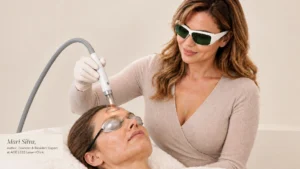
Facial laser sessions are brief. Actual laser time is typically one to five minutes. The full appointment, including preparation, runs ten to fifteen minutes. The sensation is a targeted heat pulse, most people describe it as a flick or a mild sting, and it passes immediately. Eye protection is worn throughout. Numbing cream is available for more sensitive areas, particularly the upper lip and chin, if needed.
After the Treatment
Mild redness or puffiness for an hour or two is normal and resolves on its own. Avoid heat for twenty-four hours, including saunas, hot showers, and direct sun exposure. SPF is non-negotiable on treated skin, which is temporarily more sun-sensitive than usual. Hair will not fall out immediately. Follicles shed gradually over one to three weeks, which can look like stubble coming through. It is not regrowth. By sessions four and five, most people notice significantly reduced density and finer texture in whatever does come back.
What Are the Disadvantages of Laser Hair Removal on the Face?
Laser hair removal is it safe and effective for most people, but it has real limitations worth knowing before you commit.
It does not work well on light, grey, or red facial hair. It requires multiple sessions spaced weeks apart, which means the full course takes months rather than days. Treated skin is temporarily more sun-sensitive, requiring consistent SPF use between sessions. Hormonally driven facial hair can return over time, which means maintenance sessions may become part of the ongoing picture rather than a one-time course.
The upfront cost is higher than waxing. Over time, however, the cumulative cost of repeated waxing appointments, threading sessions, and the time that goes with them generally exceeds the cost of a laser course. For most people with dark facial hair, the long-term economics work in laser’s favour.
The weighing is straightforward: for most women with dark facial hair, the advantages of lasting reduction, no ingrown hairs, and a faster timeline than electrolysis significantly outweigh the limitations. The key is accurate expectations set at the consultation rather than adjusted mid-course.
If you are curious about cost specifically, pricing varies by treatment area and session count. A consultation is the right place to get a quote built around your actual needs rather than a generic rate.
Frequently Asked Questions About Facial Laser Hair Removal
Is Laser Treatment for Facial Hair Removal Safe Long-Term?
Yes. Multiple clinical studies show a very low incidence of long-term complications from facial laser hair removal when performed correctly. Temporary redness is the most common outcome. Permanent side effects are rare and predominantly associated with incorrect laser selection or poor technique.
How Many Sessions Does Laser Hair Removal on the Face Take?
Most facial areas require six to eight sessions spaced four to six weeks apart. Hormonal hair growth, particularly along the chin and jawline, may require additional sessions or periodic maintenance over time as new follicles activate.
Can Laser Hair Removal Cause Skin Damage on the Face?
Permanent skin damage from facial laser hair removal is rare when the right laser is used by a trained clinician. Temporary redness, mild swelling, and in rare cases temporary pigmentation changes are the more realistic range of side effects. These resolve in most cases within days.
Does Laser Hair Removal on the Chin or Upper Lip Hurt?
The upper lip is the most sensitive facial area for laser treatment due to nerve density. Most people describe it as a brief, sharp sting that passes within a second. The chin is more tolerable. Sessions in both areas are short enough that discomfort is minimal in total even when individual pulses register.
Is Laser Hair Removal Safe for Dark Skin Tones on the Face?
Yes, with the right laser. The Nd:YAG is the appropriate technology for dark and deep skin tones on the face. It targets the follicle without interacting with surface melanin, which makes it safe where Alexandrite and IPL carry genuine risk. A clinic with multiple laser technologies and the expertise to select between them is the safest environment for any skin tone.
Your Face Deserves the Right Approach
Laser treatment facial hair removal is safe, effective, and backed by a substantial body of clinical evidence. The most important variable is not the treatment itself but the assessment that precedes it: the right laser for your skin tone, honest information about what your hair type will and will not respond to, and a treatment plan built around your specific situation rather than a standard package.
If you are considering laser hair removal in Victoria BC and want a consultation that answers your questions honestly before anything is booked, AGE LESS Laser+Clinic is the right place to start.